How to execute the import of a DIH planned activity outside of beas
You can create new shortcut in the desktop with an additional parameter as per image below:
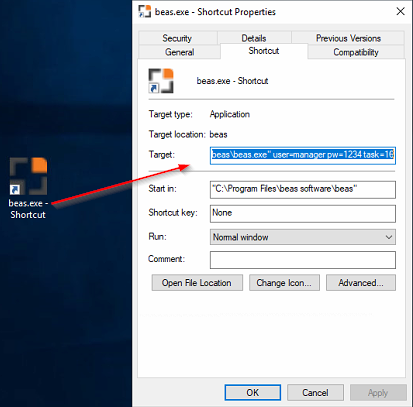
In this example, the parameters used are:
user=manager pw=1234 task=16
Note: the task number is the ID of the planned activity the you can retrieve from the beas manage server screen
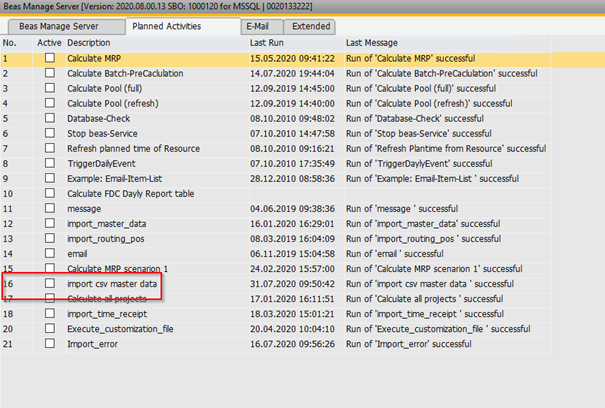
The important part comes now:
In the activity set up in the beas manage server, you will need to activate the execution of scripts for each import definition
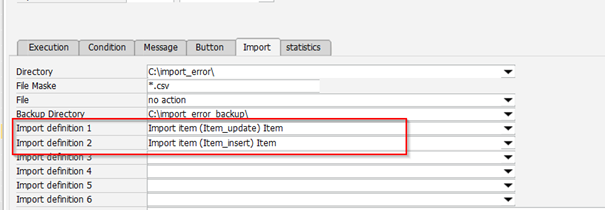
In order to obtain the correct setting for the execution of the scripts, you'll need to retrieve the system default ones by running the beas debug.
Here’s the step by step guide for how to do this:
- stop the beas service linked to the planned activities
- Set only the activity you wish to run from outside beas as “active”
- Highlight the stopped service
- open the beas debugger (ctrl+shift+i) - set it to lvl 3
- start the local beas server from the SAP Menu bar: Tools --> Web Server
This will execute the activity.
In the debug, search for the line that reports the execution of the script linked to import definitions
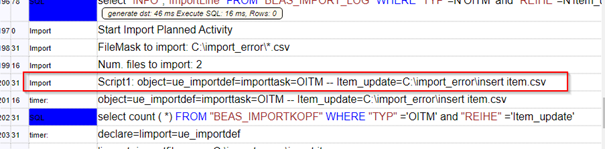
and
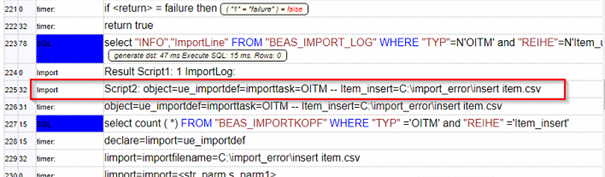
You need to copy only this part:
- object=ue_importdef=importtask=OITM -- Item_update
- object=ue_importdef=importtask=OITM -- Item_insert
Then you'll go back to the planned activity and set it as inactive
in the Execution tab you'll insert those scripts with <cr_lf>:
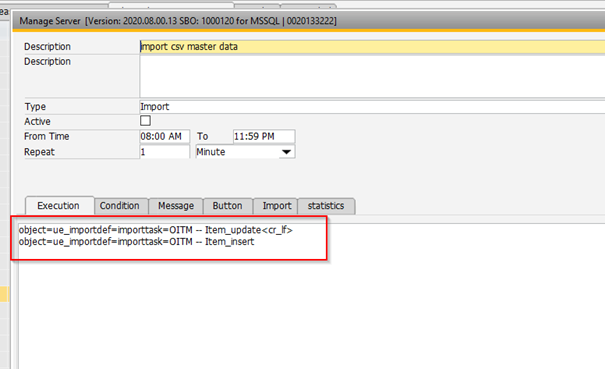
With this configurations you can then just make double click on the created short-cut in the desktop (as per first steps of this article) and it will be run as if called from the Beas Server.
Additional note:
You can create a new task in the windows task scheduler to run the shortcut with your custom parameters at a specific time interval
Note: This way of executing the planned activity will not trigger the file move from the import folder.
Comments
0 comments
Please sign in to leave a comment.